About
The hardest rooms in this work are the ones where conservation, livelihoods and competing interests collide, and where the stakes are too high and the politics too tangled to leave the conversation to chance. I design and hold those rooms. Running a process well and reading the politics inside it are usually two different people’s jobs. I do both.
My whole career has run through sustainability – from local government in England, to running ICLEI’s Europe-wide Local Agenda 21 programme as a founding member of the European Campaign for Sustainable Cities and Towns, to global work across Africa, Asia and Latin America with ITC – and for five years I was Deputy Director of the Centre for Development Innovation at Wageningen University & Research, leading on food security, climate and sustainability with partners around the world.
In between, my doctorate took me into the cloud forests of Ecuador, to study the conflict between conservation and large-scale extraction alongside the people living it. That fieldwork is still how I read a room: I assume every process has interests beneath the surface, and I make it my work to understand whose they are. I also believe who holds the pen matters and so I facilitate in a way that keeps the people whose futures are being decided firmly holding it.
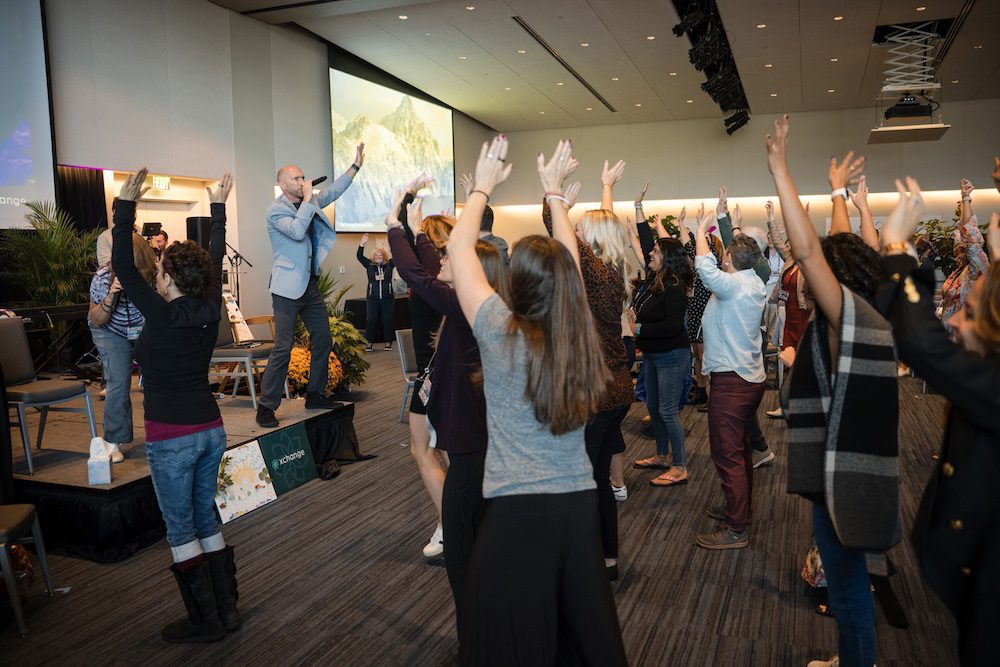
The craft itself I’ve built over decades: co-facilitating one of the UK’s first Future Search conferences, training in environmental conflict resolution and Appreciative Inquiry, and more recently certifying in the xchange approach transformational facilitation and relationship-systems work with leadership teams.
When the functioning of a major development programme broke down, with the team in conflict, and the funder ready to walk, I was asked to step in. I ran the process that realigned the team and kept the programme alive.
That is the work: not advising from the outside, but holding the room when the stakes are highest and the relationships have failed.